When you start a portrait photography business, it’s important to get the legal and administrative pieces right from the beginning. These steps aren’t the most creative part of your business, but they help you avoid headaches later and make your operation look professional and trustworthy.
Choose a Business StructureOne of the first decisions you’ll make is how your business will be structured. The structure you choose affects how you’re taxed, how you handle profits and losses, and how protected your personal assets are if something goes wrong.
Here are the three most common options for photographers:
1. Sole Proprietorship
This is the simplest option. You and the business are legally the same. It’s easy to set up and works well for freelancers or small photography studios.
Pros: Easy setup and low cost.
Cons: You’re personally responsible for any business debts or legal issues.
2. Limited Liability Company (LLC)
An LLC separates your personal assets from your business. It gives you a layer of legal protection while keeping things flexible.
Pros: Personal asset protection and simple management.
Cons: Slightly higher setup and maintenance costs.
3. Corporation
This option is more complex and typically used for larger businesses. A corporation is its own legal entity.
Pros: Strong legal protection and potential tax benefits for certain situations.
Cons: More paperwork, higher fees, and stricter regulations.
For most independent photographers, an LLC is often the best fit. It’s affordable, professional, and provides protection without much red tape.
Register Your Business Name
Once you decide on a structure, you’ll want to register your business name. This helps you establish your brand and keeps others from using the same name.
Here’s what to do:
- Choose a name that’s memorable, easy to pronounce, and reflects your work.
- Check availability on your state’s Secretary of State website to ensure no one else is using it.
- Register your business name with the state (required for LLCs and corporations). If you’re a sole proprietor using a name other than your own, you’ll need to file a DBA (“Doing Business As”).
Secure your domain name right away. You can do this through a site like Namecheap or any registrar. Even if you don’t build your website yet, you’ll own the URL for later.
Depending on where you live, you may need a business license or sales tax permit. This process is usually quick and inexpensive.
- Business License: Many cities or counties require a general business license for operating locally.
- Sales Tax Permit: If your state collects sales tax on photography services or physical products (like prints or albums), you’ll need a permit. You can typically apply online through your state’s revenue department.
- Home Occupation Permit: If you plan to work from home, some cities require this permit.
The Small Business Administration has a useful guide to registering and licensing your business.
Setup Your Business Bank Account

Keeping your business and personal finances separate makes taxes and bookkeeping much easier. It also helps you appear more professional when clients make payments.
Here’s what to do:
- Choose a bank that offers small business accounts with low fees and good online access.
- Gather documents: You’ll likely need your business registration paperwork, an EIN (Employer Identification Number), and possibly your business license.
- Open the account: Some banks allow online applications, but most will ask you to visit a branch.
Use the account for all business income and expenses to keep records clean and avoid mixing personal and business funds.
Taxes
Taxes can feel complicated, but getting familiar with the basics will help you avoid problems later.
Get an EIN
Your Employer Identification Number (EIN) is like a Social Security number for your business. You can apply for one online at no cost on the IRS website. Even if you’re a sole proprietor, it’s better to use an EIN instead of your personal SSN when possible.
Know the Main Types of Taxes
- Income Tax: Based on your profits. How you report it depends on your business structure.
- Self-Employment Tax: Covers Social Security and Medicare. Most self-employed people pay this.
- Sales Tax: If applicable in your state, collect and pay sales tax on taxable services or products.
- Estimated Quarterly Taxes: Since taxes aren’t automatically withheld from your income, you’ll need to pay estimated taxes four times a year.
Good accounting software like QuickBooks Self-Employed can make this much easier. Still, it’s wise to consult a tax professional, especially when you’re just starting out.
Keep Accurate Records
Keep clear records of all income and expenses, including receipts and invoices. This helps with taxes, audits, and tracking profitability. A simple spreadsheet works fine in the beginning, but accounting software will save time as you grow.
For Non-U.S. Photographers
If you’re outside the U.S., the process is similar but varies by country:
- United Kingdom: Register with Companies House; consider operating as a Sole Trader or Limited Company.
- Australia: Obtain an ABN (Australian Business Number) and check if you need to register for GST.
- Canada: Register a Business Number (BN) with the CRA and obtain any required provincial permits.
Always confirm local requirements before you begin operating.
Insurance

Insurance protects you from the unexpected — damaged gear, injuries, or even client disputes. Here are the main types to consider:
Liability Insurance
Covers accidents or damages that occur during a session. For example, if a client trips over your light stand, this policy helps cover medical and legal costs.
Equipment Insurance
Protects your cameras, lenses, and lighting gear from loss, theft, or damage. Many policies also cover rented equipment.
Professional Liability (Errors and Omissions)
Covers claims related to dissatisfaction or loss caused by your services, such as a missed deadline or corrupted image files.If you’re unsure where to start, look for small-business or photographer-specific policies from companies like Hiscox, PPA (Professional Photographers of America), or Hill & Usher.
Address Your Legal Considerations
Follow these steps to address your legal, tax, and insurance requirements:
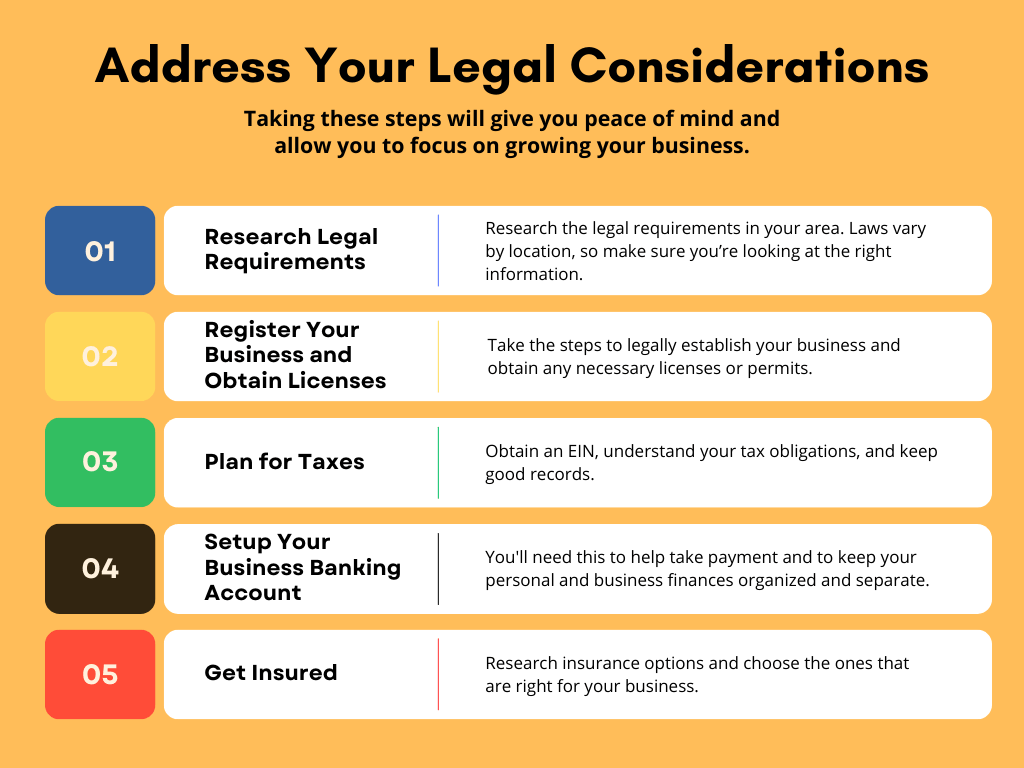
Legal setup isn’t glamorous, but it’s essential. Once you have this foundation in place, you can focus on what really matters — creating great portraits and growing your business with confidence.