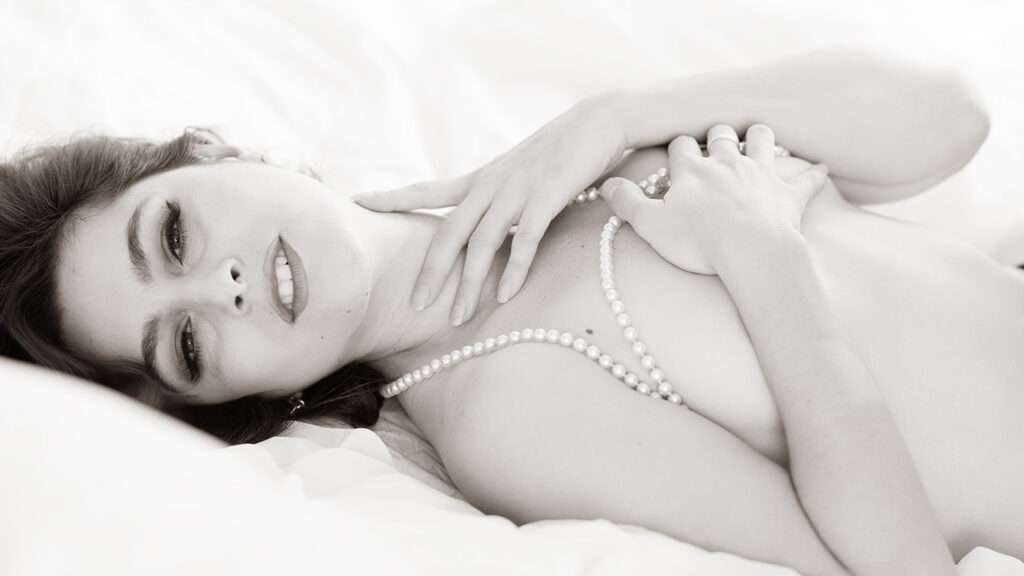
Many contemporary portraiture portfolios featuring the latest looks, perspectives, posing, and post-processing are nice up to a point. I think we’ve all been interested in viewing what others in our industry are doing. We love looking at pictures, feeling inspired, maybe getting new ideas. However, some of these portfolios and websites start becoming a little less interesting, and have less visual impact as you view more of them over time.
Developing your own style allows you to set yourself apart from the crowd. Your portfolio can be a breath of fresh air, a new experience, an eye-opener. And if you’re creating strong work that’s based on your unique view of the world, it won’t be generic or easily reproducible. It won’t be something someone else can do just because they have the same camera, lens, or preset. It will, however, be more distinct, rewarding, and valuable to anyone who appreciates and falls in love with it. You are the one and only person who can create your work in just your way.
If you do commercial portraiture, I realize that wandering from the pack and venturing into new territory can be a scary proposition. But, as it turns out, sticking with the same old marketing methods and indistinguishable wedding and portrait styles is not in a photographer’s best interest and isn’t a good long-term strategy. Standing out, not blending in, from the crowd is the key. If you do portraiture simply because you love to photograph people, you have everything to gain from expanding your vision and making it true to who you are as an artist.
Mastering Your Tools & Techniques
Every medium has its materials and fundamental techniques. An artist first learns to use these basic tools and develop rudimentary skills in the hopes of someday creating work so they can fully realize their vision. If a painter, sculptor, or musician were to skip several steps and fail to grasp the foundations of their art, they might be able to create a limited number of interesting pieces, but those naive works would eventually lose their appeal. With the possible exception of the rare genius, stronger skills usually win out in the long run.
Learn to use your camera. I realize this sounds like overly simplistic advice. But, most people who own cameras really know very little about how to use them. Camera manufacturers realize this and put automatic, do-everything-for-you modes on most cameras. It’s okay to use these modes, but you’ll be limited as to what you can do with them because they take most of the control out of your hands. The more you learn about the specific functions and capabilities of your camera, the more tools you’ll have at your disposal.
I suggest you learn one new camera function, exposure concept, or lighting technique at a time. Trying to learn too many things too quickly is generally counterproductive. With each new feature, concept, or technique, make sure you spend enough time thinking about it and using it so that you fully understand how and why it works. A good test to see if you know what you’re doing is if you can clearly and correctly explain it to someone else.
Simplify and Standardize Your Process
As you become more proficient with your camera, you’ll find that there are certain controls you use more often than others, depending on your shooting technique. These are the controls you should focus most of your attention on. Learn to use them without having to think about using them. When driving a car or riding a bike, you don’t have to look at the pedals, steering wheel or handlebars, to get from one place to another. That smooth ability to focus on what’s in front of you without thinking about the controls is what you should strive for with your gear.
Sure, with photography, as well as with driving, you might have to glance down when operating functions you use infrequently, but on the whole, your camera should simply become an extension of your vision. Although checking the camera’s preview monitor, doing lens changes, and other factors will somewhat break the flow of your work, you should be capable of executing a series of shots without having to think about the technical details.
Understanding exposure concepts and lighting techniques are also keys to becoming a complete photographer. You should really have an understanding of the basic properties of light, how aperture, shutter speed, and ISO work together, and how to light your subjects. These are things that take time to learn and sink in, but once you know them inside and out, you’ll have the confidence of knowing you can do just about anything with a reasonably equipped camera and a light or two. With the right knowledge and resourcefulness, you’ll also be able to quickly come up with solutions where other photographers might have gotten stuck and become unable to deliver a good shot.
Hopefully, you’ve gotten the point by now that trying to reach a technical level of proficiency is not the end goal, it’s just a means to an end. Anyone can learn to use a camera and some lights. That alone simply gives them the necessary skills to work with. If you can learn to create a perfect corporate headshot with three-point lighting and a good pose, that’s great, but how does that make you different from anyone else who can do that, or anyone else who can learn to do that? The technical skills you can learn, and the gear you can get your hands on, won’t set you apart. Being able to create something unique with those tools will.
Think Like An Artist
One of the first things you should do when making a commitment to developing, and possibly marketing your own style is to learn to think like an artist. That means you’ll have to start viewing yourself in a new light. You’ll have to realize that your work is for some people and not for others. Most importantly, you’ll have to learn how to follow your own path.
It’s nice to get good feedback on your work, especially from grateful clients and your colleagues. But it’s not something you should think about as you’re creating. If you’re thinking about what other people say they like about your photos or anyone else’s, you’re not really thinking about the task at hand; you’re not fully focused on your work and it will show. Creating art is about expressing an idea with your own vision. This is where you’re going to produce your best and most rewarding work for yourself, and consequently for the viewers and clients who value it.
Ah, but what if your art, your best work, isn’t something clients will value? What if it isn’t going to get you the friendly, encouraging comments and likes on Facebook and Instagram? What if people simply don’t like it or don’t get it? That, my friend, is your fear talking. It’s that little voice that tries to scare you away from notions of wandering from the pack. It tries to tell you that it’s safer to be a follower and just produce work that doesn’t deviate from the standard. Listen to that little voice and you’ll never reach your full potential. Your efforts will be small and eventually so will the rewards.
The truth is that you’ll never be able to please everyone no matter what your pictures look like. It’s just not going to happen. If you’re doing all of this for mass approval, you might as well quit now, because you’re in it for the wrong reasons. Other photographers will judge your work on their own personal tastes and criteria for what a “good” image is. Some will just tear your work down because they can. Others will tell you how great a shot is when you, in your heart, know it’s mediocre at best. What’s the point of this?
Clients (paying customers or buyers) are something else you shouldn’t worry about. They tend to take care of themselves where taste is concerned. Your work will resonate with some people, and it won’t with others. And if your work is strong in its execution, if you’ve really put yourself into it, it will resonate with force. When this happens, your clients won’t just like your work, they’ll love it. They’ll become loyal fans. The others will simply move along. The ones who don’t get it, don’t understand it, or simply don’t like what you do, were never going to be your choice of customers anyway.
I’ve seen where some potential clients object to a photographer’s images because “the background is blurry,” or “you can’t see the whole person in the picture,” or “the person in the picture isn’t centered in the middle as they should be.” One can argue that clients should be educated, but to be honest, how can they be? When it comes to taste, people like what they like and see how they see. These tastes are likely developed over a lifetime of experiences. You can explain to someone why they should like something, but that’s not really going to make them like it. Conversely, people are going to love what they love, and some of those people are going to love what you, and only you, can do with your portraiture.
As you progress down a path of work that’s truer to who you are, and more unique in the world, your portfolio is what will set the standard that matters. This is what your clients will judge your work by, and this is your most effective promotional tool. Because your portfolio will contain images that only you can provide, clients will have no choice but to come to you if they want your unique style of portraiture.
Free Yourself
To grow as an artist, you have to learn to free yourself; allow yourself to create your art, and reject the things that keep you from doing so. This is a process, not an overnight thing. It’s almost a certainty that you aren’t creating your best work right now. There are things holding you back. Take some time to identify what is keeping you from making the type of pictures you’d love to make. Remove those barriers.
If you’re thinking the answer lies in new lenses or a new camera, you’re on the wrong track. The process of freeing yourself as an artist has nothing to do with those things. It’s all about getting past the gear, the old habits, the self-doubt, and the mainstream.
To get started, think about what you’re interested in. The things you will put most of your energy into are the ones you’re passionate about. What types of portraiture would you most like to do? Are you a storyteller who would like to use environment, tableau, or costumes in your portraiture? Are you interested in expressing sensuality? Do you like the classic one-light image?
The answers to these questions will guide you on your journey toward more rewarding portraiture. I’m sure there are certain types of imagery that stimulate you more than others. Explore the things that interest you about people or the way they can help you express how you see the world in pictures.
Some other questions about how you approach portraiture:
- Do you look for ways to connect with your subject? How do you establish rapport? Should you try to improve this?
- What do you think about while you shoot? After a session is over, do you ever feel like you missed an opportunity for a better shot? What keeps you from trying new ideas?
- With non-commercial work, how do you choose your subjects? Why do you select the ones you do? Is there a type of subject, or a particular person you’d like to photograph but never have?
- What qualities do you look for in a location?
- What is your personal philosophy on lighting? Do you only use natural light? Do you consciously think about lighting at all? Do you prefer a large setup or a simple one?
- Who are some of your favorite portrait photographers and why? What do you like most about their images? What do you like least? Are these personal tastes evident in your work? Should they be?
- Do you prefer to use friends or people you’ve never met before as subjects? Why do you think that is?
What do you think your answers to these questions say about your personal preferences? What do they say about your fears and aspirations? Think about these things and see what clues they might provide about where you should be going with your art.
There’s no right or wrong way to make a portrait. Anything that can be photographed, can be photographed in an almost infinite number of ways. For any given subject, who’s to say which perspective is the best? There’s no one, perfect way to take any picture. There may be stereotypical views of certain subjects, but that doesn’t make them right. And since there’s no right or wrong way to photograph someone, you might as well just photograph them YOUR way. That’s the best way for you to do it.
Don’t compare yourself or your work to other photographers. There’s really no point in doing that unless you’re trying to create the same exact kind of pictures. By all means, learn or become inspired by looking at someone else’s work, but not to the extent that you feel your work is somehow inferior. If you try to emulate the work of someone who has perfected their technique over time, you’ll be disappointed. They’re probably going to be better at doing what they do best than you will be at trying to copy them.
Forget perceived (and real) expectations. Thinking about them doesn’t help you do good work. For one thing, most people aren’t as concerned with your photography as you are. And the people who do have certain expectations where your work is concerned (like paying customers) should only expect you to do your thing. That’s it. Let them know that in one way or another. They are paying you to produce portraiture the way YOU produce portraiture. If they want pictures that look like someone else’s, they need to go to that other photographer.
Be open to surprises. Don’t assume you know how to portray the subject on first impression. Someone you first meet might seem more introverted and shy because they don’t know you well enough to reveal themselves on a personal level. They might also feel unsure about what you need them to do in front of the camera. Keep your mind open to the possibilities and you might discover something about your subject that makes all the difference. You might also discover something new about your process.
Your Vision, Your Style
When young musicians first learn to play an instrument, say an electric guitar, they usually begin by trying to emulate someone they admire. This is often true with photographers. The attempt to reproduce the work of a respected artist or craftsman is a great way to learn, and it’s fun. Eventually, the guitarist wants to learn how to play his own music, to express his own feelings. Likewise, a photographer might want to express their own vision as an individual with a desire to share what they see.
It only makes sense that a photographer would want to create images that actually represent their personal vision; their own way of looking at life and people. Being one of the thousands of photographers to copy the latest look isn’t going to cut it.
But how do you find your own unique expression? Style, voice, and vision, are things that become apparent over time. They tend to reveal themselves in a series or body of work. They might show up unannounced or somehow be prodded along. But keep working and developing your ideas along new paths and things will happen. A photographer may have several distinct styles in development at a given time, or just one.
Whether creating a new look is a deliberate effort or something that’s happening seemingly on its own, you might have to make several attempts over weeks, or even years, to get a look or technique to work out just the way you want it to. That doesn’t mean your first tries are not going to be good, they’re just going to be part of the process of fine-tuning.
You have to make those images in order to get to the next images. Eventually, you’ll either find what you’re looking for, or it’ll find you. And you’ll know how to reproduce it on-demand and create variations at will. You’ll be able to call it a personal style and apply it to a series of images or provide it reliably to clients who come to you for that look. It’ll be a great tool for you.
Finding your personal vision, identifying your unique style, using your own voice, aren’t things you just say and then do. It is a process and it never ends. Your view of the world changes over time, and your expression of it does, too. Not from week to week, but certainly as the years go by. The most important thing you can do is just keep working and learning from your work. If you’re worried about finding your personal vision or style, just keep going; it will show up and you’ll see it if you’re paying attention.
Be a real artist with your camera, and people who want a real artist will come to you. Achieving this goal might take a while. Be patient. Your personal vision and style will shine through if you allow them to. Know the rules, break the rules. Go against the grain. Do the great portraiture you are capable of!