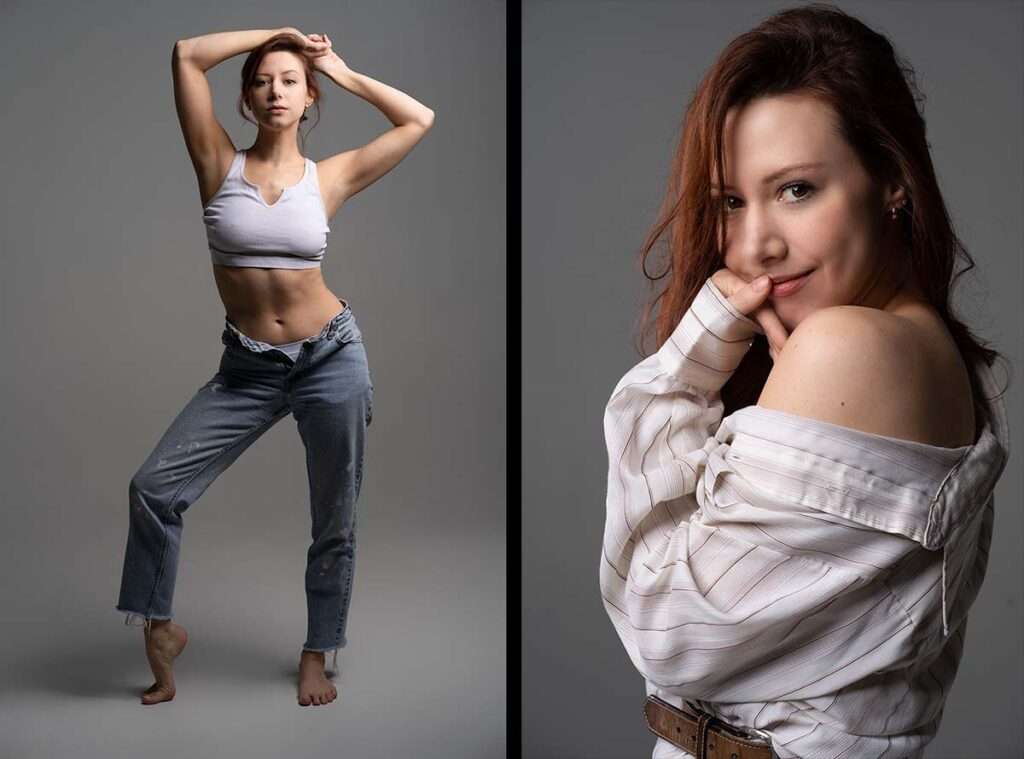
Maybe you got into photography when you realized how much fun it was to take pictures of your family and friends. At some point, you advanced from simple snapshots and became interested in doing more serious portraiture. You started to think beyond the click of the shutter button and became more aware of things like composition, lighting, exposure, and the arrangement of people and faces within the frame. You became a photographer when taking pictures became just as much about the photograph as the subject. And while the photographs are what you’re really after, you know it can’t hurt to have a great subject posing for you.
Most working portrait photographers don’t always have the luxury of being able to pick and choose their subjects where paying clients are concerned. Some clients naturally shine in front of our cameras and some, well, not so much. But we do the best job we can with whatever we have to work with. That’s part of the adventure — and it’s how we pay the bills. It’s a great day when you get a client with an amazing look and the shoot results in incredible photos that you can’t wait to share. But, of course, that doesn’t always happen. To turn the odds in your favor and to work with great people willing to help you realize your vision for an image, and not just theirs, it’s up to you to find the right people for your shots. They’re out there, you just have to know where to look.
Working with models definitely has its advantages. This often allows you to bring your creative ideas to a shoot while working with someone who is likely better in front of the camera than the average person. If the model has hired you, or if you have hired the model, one of you is doing work for the benefit of the paying party. But there are also more cooperative model/photographer arrangements where each party works to help the other achieve certain goals. In these cases, agreements are made to exchange services instead of money. I find that I meet some of my best subjects this way.
Since finding models willing to be paid for their services is pretty straightforward, we’ll focus our discussion on how to find people willing to be photographed on a trade basis. In this case, for me the goal isn’t to save on model fees, it’s just that sometimes the most creative and collaborative subjects are people who are actually interested in helping you create art, where they can feel engaged in the process and be proudly featured as the subject of your work. Professional models are, by definition, in it to make money. But sometimes it’s the strength of a photographer’s work that’s the big draw.
Trading Services
The easiest way to find someone to pose for you is to look for people who are actively seeking the services of a photographer. If you seem to know what you’re doing and are willing to do it without charging a fee, there are plenty of people who will be happy to pose for you. Usually, all they want in exchange are some good pictures of themselves.
Aspiring models, actors, musicians, and others are often in need of new, or better, pictures for promotional purposes. And, there are also people who would simply like nice photos of themselves, especially if they don’t have to pay for them.
Trading services in order to build your portfolio is a smart thing to do. You earn an opportunity to experiment, work on your technique, create something of your own vision, and make pictures that showcase your style and abilities. Your model gets some pictures from the shoot, for their own use. I usually provide a generous number of images (some retouched) for a model’s personal and promotional use. My agreement specifies that they are allowed to share the images freely with family and friends, online or otherwise. The model may also use them for professional reasons, if any. The only thing the model is not allowed to do is sell, or otherwise make money directly off the images without permission. This type of trade for services is generally referred to as TFP (Trade/Time For Print) or TF* where the asterisk stands for the type of media to be determined. Sometimes the term, testing or test shoot, is used.
There are arguments for and against the uses of these labels to describe what is essentially an agreement between one person and another to trade services. One person provides the services of a model, the other provides the services and products of a photographer. Use the terminology and agreement most appropriate to your situation.
There is also the option of paying your subject to pose for you. In these cases, one could make the argument for not having to provide the model with any images for their own use since their compensation is in the form of money. This is something you’d have to work out with the model, but there are all types of agreements you can explore with regard to compensation for services.
Where to Look for Subjects
So, where do you find people who will be willing to pose for you? Places to look include online networking sites like Model Mayhem, which exist to help models, photographers, stylists, and others connect and begin working with each other. Craigslist can give you the opportunity to connect with complete strangers, which can be interesting.
You can use social networking sites and services to do the same thing. Facebook allows you to put the word out to a known group of people, namely your “friends” and friends of friends. You may have met some of these people at one time or another, and some you may only know as online friends. But by posting your call to have someone help you with a photo project, you’re likely to get some volunteers. Since some level of familiarity exists between you and the person viewing your posts there’s less of the unknown factor that can make some people apprehensive.
I’ll also occasionally dig through my list of friends, to see if any of their friends might be good candidates for photos and projects at some point. If I find people that seem to have a good look or adventurous attitude, I’ll send them a friend request. Eventually, I might contact them directly to ask if they’d consider posing for me. General postings and personal requests have led to several new friendships and lots of great images!
Of course, I’ve always liked the direct approach, too. Do you know of someone who might make a great subject? Why don’t you just ask them if they’d like to pose for you? If you’re a little shy, it’s not the easiest thing in the world to do, but if your approach is sincere, you’ll find that people are often willing to help out if they can get some pictures out of the deal.
What to Look for in a Potential Subject
It’s hard to say what qualities make for a good portrait subject. That’s because it depends on what you’re looking for in the pictures you’re trying to make. Certain people are obvious choices for certain looks. But still, not everyone who seems like the obvious choice is a good candidate. One thing to keep in mind is that the minimum requirement for a successful photograph is to have a subject that looked right for the image in that instant you captured it. Discounting bonuses like enjoying the experience of the shoot, getting a variety of looks, or anything else other than the practical execution of a particular shot, the only thing that might matter is that you ended up with a shot that worked. Sometimes, that’s what it all comes down to. Sometimes that’s the best that you can expect.
But what if you’re striving for more than the lucky shot that happened to work? The best advice I can give is for you to maximize your chances for several great images to choose from by developing a good working relationship with a model. Good rapport can carry over and build a foundation for even better photos in future projects. The more you work with someone, the more you get to know their way of working, their strengths and weaknesses, and the more comfortable both of you get, so trying new ideas will be easier.
Here are a few guidelines I can offer:
A Good Subject Is:
- Expressive. Has a willingness to show or portray a range of emotions.
- Confident. Possesses a belief in their own ability to look good for the camera.
- Adventurous. Shows enthusiasm for unconventional ideas.
- Creative. Understands and wants to help in the creative process.
- Attractive or Visually Interesting.
- An Extrovert. Likes to communicate and be seen.
A Poor Subject Is:
- Uncomfortable in front of a camera. Hard to get to play the part.
- Self-conscious. It’s hard to work with someone who’s over-thinking their expressions and poses.
- Distrusting. Has a hard time trusting the process or the photographer.
- Uninteresting where the camera is concerned. I realize this sounds like a harsh statement, but it’s the truth. Beautiful, attractive, or otherwise unique or interesting people make for more visually appealing images.
It’s important to work with better subjects because they tend to give you more opportunities for better pictures. Another thing to realize is that it’s easy to agree to do a photoshoot, but it can be energy-consuming, expensive, and ultimately a huge waste of time if you’re not careful with selecting your model. Being nice, and agreeing to even a quick shoot with someone who you’re fairly certain isn’t the best subject for your needs, could eat up several hours of your time, or more, trying to make it all work. This includes everything from organizing the shoot to trying to salvage images in post. Work with good models and positive people as often as possible.
The Actor Factor
Aspiring models and actors are always looking for updated photos to provide to their agents or directly to other people in their industry. They are often willing to do some posing for your purposes in exchange for some good headshots. I like working with performers because I know that they enjoy being the center of attention and will give their best to the camera. It makes my job much easier when the subject can put it out there and really have fun with the process.
Someone looking for portfolio shots will likely bring several outfits to a session. Most of the time, this is not just because they want variety, but because they’re looking to offer you choices and to get your opinion on what might look best. After all, you’re the photographer, you’ve got the eye for this sort of thing.
I find it best to stick to the basics and use common sense. For headshots or basic portraits, it’s a good idea to go over these tips with your model (or client) before they show up to the session:
- Solid Colors. Wear solid colors or at least something that isn’t so distracting that it takes attention away from the face.
- Appropriate Colors. Really, I like to stick with darker or neutral colors. Neon Green or Hot Pink might just take over the whole image. Lighter colors can work, too, even white. But since the eyes of the viewer tend to be drawn to lighter areas of the image, make sure that you’re composing, lighting, and focusing the image so that the subject’s face and eyes are the real areas of interest in the picture.
- Character Clothing. Sometimes actors and models bring along character costumes as a way to help drive home the point that they can play a cop, doctor, femme fatale, or firefighter. This is their call. They, together with their agent, need to decide what their headshots are going to look like. But, while a worn leather jacket or a suit and glasses might really help make a point about the characters they can play, a cheap costume or something similar might end up looking silly. Costumes and character attire can work if they actually look authentic.
- Hair, makeup, and grooming. Your client should understand that the camera lens picks up more detail than what people normally notice in everyday life. They should take extra care to make sure everything looks good for the camera. But, don’t let them get too worried about that. Reassure your model that retouching will take care of little things like a surprise pimple or blemish should they appear just prior to the shoot.
Model Releases
Whether you and your model have decided to trade for services, or money is being exchanged, you should make sure you have something in writing which spells out the details of your arrangement.
You should at least have a model release that states exactly who gets what; it should specify the permissions they are granting to you for use of their likeness and the usage rights you are granting for use of your copyrighted images. The model release should be fair, meaning if you’re not willing to let the model use any, or enough, of your images, you should provide them with some other form of valuable consideration.